Saturday, December 31, 2011

The Obligatory 2011 in Review Blog

Well, it's the last day of 2011, and everyone's writing about what has happened over the past year and what they hope for in the coming year.  Who am I to do anything different?  :)  This is the first year I have blogged for a full 12 months (I started this blog in May 2010).  So for a recap of my year, I can look back at my writing for the highlights.

I began the year interviewing for internships, travelling from state to state hoping to impress someone enough to find a match in the crazy selection process.  At the end of February I found out the results and matched successfully.  The whole experience was a bit overwhelming, but I finally wrote about the outcome and my future in April.  For the next few months I prepared for the transition, focusing on anniversaries, finding a new homesaying my first goodbyes, taking a Disney vacation, and saying my last goodbyes.

In mid-July I moved to Dallas and began the second half of my year, transitioning from graduate student to predoctoral intern.  I learned my way around Dallas and tried to understand my new identity away from school as I became an adult again.  Then, once the work year began, I pledged to write weekly about my internship experience.  I'm proud to say that I've kept up with it pretty well, and have grown both as a writer and an intern because of it.  I have written about:


So, that is 2011.  It's what I might call pre-2012.  I had a major transition, moved to a new city, and took on a new role.  2012 may bring the same experiences on another level.  In August I will graduate (finally?  or already?) and find a job.  The job could be here in Dallas, in a city I've lived in before (anyone in San Antonio want to hire me?), or wherever a great opportunity takes me.  So next year's blog could read like this year's- a spring of working and hoping for a job (but without the stress of the internship match, thankfully!), a summer move, and a fall of adjusting to a new role.  Or, I could end up with something more familiar, but either way 2012 brings a great deal of transition.  Fortunately, it's the last major year of transition in my college career.  I can't wait for 2012.

Friday, December 16, 2011

Lessons from the Halfway Point

As of this afternoon I am on Christmas/Winter Break.  It's not quite the halfway point for the school year (or internship), but it's pretty close- the halfway point for the school year falls on January 13th, and the halfway point for internship, assuming I get July off as advertised, would also fall in mid-January.  It is, though, the end of the calendar year, and it definitely feels like I've been through at least a half-year's worth of work and learning.  I have interacted with over 70 children and adolescents, and while I can't describe what I have learned from each child, I can highlight as many lessons as possible that will drive my work in the next half of the year and beyond.

Children need consistent rules and discipline from an early age.  Parents, please teach your children respect, give them high expectations, and always follow through with consequences.  Giving your child whatever he or she wants to stop misbehavior only reinforces the behavior, and makes the transition to school harder.

Children need role models.  They need adults around them who make good decisions, who control their anger, and who care for others.  How can a child control their anger if everyone around them is yelling at them?  How can an adolescent resist peer pressure when they live in a neighborhood or household where drugs are used and easily available?  How can a teenager set life goals if they have family members in prison?  How can they learn any self-discipline if no one at home supports their choices, sets rules, or gives them the attention they need?

So many of my children have few or no role models at home, so they have never learned the skills they need to be successful.  They want to do well, want to have hope, but are often lost.  The adults around them have made poor choices that have affected the lives of the children- and while the adults often realize something needs to be done, they don't know how to help, or don't have the skills or means to help.  The situations seem hopeless, and the child or adolescent needs to feel they have a future.

Schools need to be safe places for children.  Especially for children who have difficulties at home, school should be the place where adults are caring, positive, and nurturing.  If a child or adolescent is in need of a role model and hasn't found one within their family, there should be strong adults at school that can be admired and trusted.  Unfortunately, the more difficult the area, the less likely this seems to be.  Teachers and staff in high-poverty schools seem to often be burned out, or more aggressive in their methods, and students have a hard time finding an adult they trust.  In addition, many adolescents who I work with feel they have already been labeled as a "troublemaker" and that no one cares about them, making the relationships even more challenging.  Even when an adult does seem to care, the student does not respond.  Schools, particularly in these areas, need to evaluate their methods.  They focus on discipline and being "tough", and often miss out on the ways they can bring positive change to their students.

So what does all of this mean to my work?  It means that for the children and adolescents I work with, I am a psychologist (intern, of course), but also might be a mentor, a role model, a parent, an advocate, and a friend.  I fill any void I need to that another adult hasn't taken, until I identify other people or resources who are willing to help.  For some of my cases, I fill just the primary role; for others, I fill all roles.  It is the reality of working in my neighborhood.

In the second half, I want to improve at my roles.  Of course my primary job is to become a good school psychologist, and I am growing tremendously.  Of the other roles, I am working most at advocacy.  I want the schools to use positive approaches in working with all students, particularly those with emotional needs.  One of my schools is moving from a reactive disciplinary approach to a mental health proactive approach, and I am hoping our successes can be replicated elsewhere.  I want all of my students to feel that when they come to school that everyone cares about them, not just me.  I want them to feel that they are important, and they have a future.

When it all comes down to it, there's really one lesson that all of this comes down to.  It's so simple, and yet somehow isn't always the focus.

All children need love.

Monday, December 12, 2011

What's your Niche?

My supervisor talked today, as she has before, about my "niche".  She sees my secondary rotation as being my niche within the department, and she asked me what else I am interested in becoming involved in.  I answered, and this other area, which is linked to my rotation, make it clear to her that I could carve out this niche and become a valued member of the district.

One one hand, I'm not completely sure this is what I want to be known for forever- the second part maybe, but I'm still unsure about the other work I have been doing.  On the other hand, there is a value to having a niche, because it gives me an area of expertise that will be important to others.  As I prepare to look for a job, and possibly stay in this district, anything that makes me stand out is critical.

The whole time I went through graduate school I tried to carve a niche for myself.  Now, in internship, my identity has been shifting.  I have found a new appreciation for counseling children and adolescents, which helps me build relationships in a way that I haven't done since I taught.  As my caseload grows, though, I am trying to figure out what my niche is- adolescents with depression?  anger management?  children in poverty?  Or is my niche the fact that I can apply everything I loved as a teacher and graduate student- creating support systems in schools, intervening early, and finding positive approaches to problems- to the issues facing children and adolescents with high need?  I guess we'll see where it all ends up.

Have you found your niche?  Do you know what you do that makes the world a better place?  I hope we all find it.


I can't leave this week without mentioning my cousin*, Lisa Marie Calderone-Stewart, whose niche was empowering inner-city youth.  She did an amazing job at it, too.   She passed away on Friday.  Here is her story.


*I think I have finally sorted out she is my third cousin, once removed?  She's still family.

Monday, December 5, 2011

Cold Weather: An Analysis

I owe a post about Thanksgiving and the times after.  But only one thing is on my mind right now- the horrible, miserable, cold weather I have been dealing with, and will be facing for at least the next week.  I hate cold weather the way other people hate hot weather, or root canals, or taxes.  I am sure my loathing will ease as winter settles in (wait, it hasn't started yet?), but this first freeze is always the worst.  So, as I warmed myself in the tub this evening, I challenged myself to find reasons why cold weather is actually needed and, perhaps, a good thing.  Here's what I came up with.

Many animals need cold weather for survival.  Bears and squirrels (or is it chipmunks?  or both?) hibernate, and I'm assuming if it weren't cold they wouldn't know when to turn out their lights and crawl into their beds.  Maybe the changes in daylight are plenty, though, and they don't need the cold.  So I'll get back to you on that.


Arctic and Antarctic animals need cold though!  What would the world be like without polar bears and penguins?  Not as cute, anyway.  And we wouldn't have movies like March of the Penguins and Happy Feet.  Well, one of those would be missed anyway.  We also wouldn't have awesome Coke commercials at Christmas.


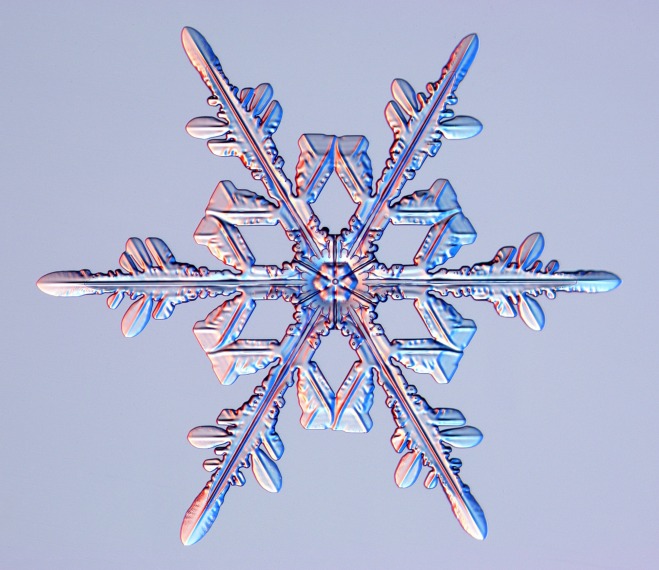
So why do humans need cold weather?  Well, snow, of course!  First of all, snow is beautiful to look at.  Each snowflake is unique, so they tell us.  Of course, you can't tell this by looking at them outside while you are freeing, but you can tell by looking through microscopes, which I think is just as pretty, and warmer.

Okay, so snow is fun because you get to play with it!  Snowballs, snowball fights, snowmen.  Then sports, from skiing to sledding to ice skating.  I skiied once, and hurt myself.  I have ice skated a few times, all indoors in Texas, where it wasn't nearly as cold outside.  But I'll admit, snowsports are fun.  I don't need them every day though.  In fact, I'm willing to have them stay wherever you cold-loving people live and I'll travel to them!  Keep your resorts in good shape and I'll happily visit when I need a snow fix.  It's what I did as a kid in California and it worked great.  Here in Texas I'd actually have to fly.  Or drive to the mall to ice skate.


So, this exercise has taught me that cold weather is a wonderful thing.  For other people.  I have no desire to see seasons change, break out fuzzy sweaters, or put on heavy coats.  I love hot chocolate, but am fine with chocolate milk, and will take my cider or coffee hot or cold.  I want flip flops over boots and shorts over jeans.  In the immortal words of Davy Crockett, "You may all go to Alaska (Colorado, Antarctica, etc)- I will go to Texas (Hawaii, Mexico, etc)!"